
The Future of UAV Aerial Surveying: How Satellite Navigation Empowers Smart Aerial Photography
2024-11-05
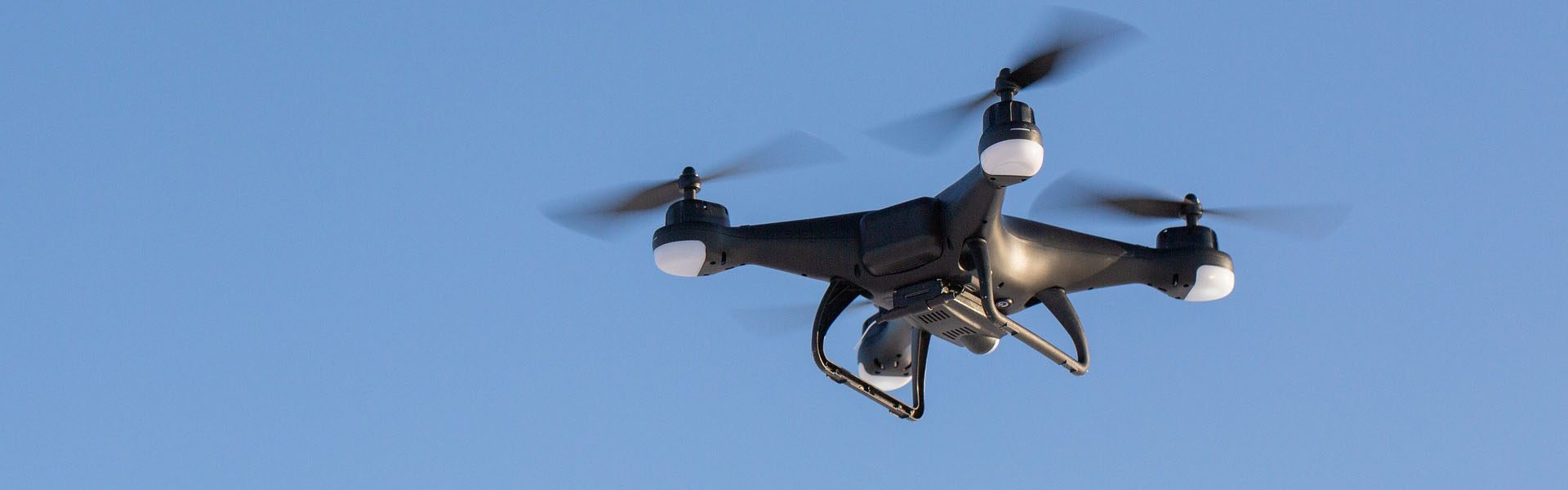
Unmanned Aerial Vehicles (UAVs), commonly known as drones, have become indispensable tools in a wide range of industries, from agriculture and construction to environmental monitoring and urban planning. One of the most exciting applications of UAV technology is in aerial surveying, where drones equipped with advanced sensors and cameras can capture high-resolution imagery and detailed 3D maps of landscapes. As UAV technology evolves, so too does the precision and accuracy with which they can perform these tasks. One of the key enablers of this revolution is satellite navigation systems, specifically GNSS (Global Navigation Satellite Systems) like Beidou, GPS, and GLONASS. In this blog, we’ll explore how satellite navigation systems are powering the future of UAV aerial surveying, transforming industries, and enabling “smart” aerial photography.
The Role of Satellite Navigation in UAV Aerial Surveying
UAVs are equipped with various sensors, but to accurately map or survey an area, they need to know their exact location in real time. This is where satellite navigation systems come into play. Using signals from satellites orbiting the Earth, these systems provide highly accurate position data that allows drones to navigate precisely, even in challenging environments. The most widely known satellite navigation system is GPS (Global Positioning System), but there are several other systems in operation globally, such as Russia's GLONASS, the European Union’s Galileo, and China’s Beidou. Each of these systems provides a layer of redundancy, ensuring that drones remain connected to reliable signals no matter where they are in the world.
How Satellite Navigation Enhances Aerial Surveying
1. Improved Precision and Accuracy
Precision is crucial in aerial surveying. Without accurate position data, the resulting maps and images could be distorted or incomplete. GNSS technology allows drones to capture high-accuracy georeferenced data, meaning that every image taken by the drone is precisely tagged with geographic coordinates. For surveying tasks that require centimeter-level precision—such as construction site monitoring, land development, and agricultural mapping—this level of accuracy is invaluable.
2. Real-Time Data Integration
Satellite navigation systems enable real-time data integration, which allows UAVs to continually adjust their flight paths based on position updates. This real-time feedback ensures that drones can maintain their course, adjust for environmental factors like wind, and avoid obstacles during flight. For aerial photography, this means that a drone can fly through predefined routes or patterns without the need for constant manual intervention, ensuring a seamless experience for operators.
3. Enhanced Autonomous Operations
UAVs with satellite navigation are no longer limited to just aerial photography. With the ability to integrate GNSS data, drones can be used in a variety of surveying applications, such as:
●Construction and Infrastructure Monitoring: UAVs can track the progress of construction projects, create 3D models of buildings, and even monitor the structural health of bridges or other infrastructure.
●Agriculture: Satellite navigation enables drones to map large areas of farmland and collect data on soil health, crop performance, and irrigation needs, leading to more efficient farming practices.
●Environmental Monitoring: Drones equipped with GNSS can help monitor environmental changes, such as deforestation, coastline erosion, or wildlife movement, with high spatial accuracy.
●Mining and Land Surveying: Drones are increasingly used in mining operations to create topographic maps and monitor site conditions, with satellite navigation helping to ensure that data is both accurate and timely.
4. Multi-Domain Applications
One of the biggest advantages of using GNSS in UAVs is enabling fully autonomous flight operations. With satellite navigation, drones can fly pre-programmed routes without needing constant input from a human operator. This autonomy is particularly beneficial for large-scale surveying tasks that would otherwise require significant human resources, reducing labor costs and minimizing errors caused by human factors. Furthermore, autonomous drones equipped with GNSS are capable of performing tasks such as photogrammetry, LiDAR scanning, and thermal imaging, all while maintaining precise positional data. This greatly enhances the quality of the collected data and reduces the amount of manual processing needed after the survey is completed.
The Impact on Smart Aerial Photography
Satellite navigation isn’t just about enhancing surveying accuracy; it’s also enabling the next generation of smart aerial photography. Traditionally, capturing aerial images required complex manual operations, from piloting the aircraft to adjusting cameras. Today, GNSS-equipped UAVs enable drones to capture images with unparalleled precision and ease.
1. Automated Photography and Image Stitching
With GNSS data integrated into the flight planning system, UAVs can autonomously capture overlapping images that are later stitched together into high-quality panoramic or 3D images. This process eliminates human error in both flight path planning and image alignment, leading to more consistent and reliable results.
1. Automated Photography and Image Stitching
With GNSS data integrated into the flight planning system, UAVs can autonomously capture overlapping images that are later stitched together into high-quality panoramic or 3D images. This process eliminates human error in both flight path planning and image alignment, leading to more consistent and reliable results.
2. Georeferenced Images
For industries such as surveying, real estate, and agriculture, georeferenced images are critical. Satellite navigation ensures that every image captured by the drone is tied to real-world coordinates, making it easier to integrate the images into mapping software, CAD tools, or GIS platforms. This geospatial data enables professionals to analyze the environment with greater precision and make data-driven decisions.
3. Increased Operational Efficiency
Smart aerial photography powered by satellite navigation also increases operational efficiency. With accurate position data, drones can quickly fly to the optimal vantage points, capture the necessary imagery, and return to base with minimal time lost. This is especially important in industries like real estate or tourism, where clients demand fast turnaround times.
4. Improved Post-Processing
Satellite navigation systems allow for more efficient post-processing of aerial imagery. Since all the images are georeferenced, software can automatically align and stitch them, reducing the time and effort required for manual corrections. In addition, high-precision GNSS can be used to generate highly accurate elevation models, which are essential for 3D modeling and terrain analysis.
The Future: Integration with Other Technologies
Looking ahead, the integration of satellite navigation with other emerging technologies will further revolutionize UAV aerial surveying and smart aerial photography. Some of the exciting possibilities include:
1.AI and Machine Learning
As AI-powered image recognition becomes more advanced, drones will be able to analyze captured images in real time, identifying objects, changes in terrain, or even detecting anomalies in construction sites or agricultural fields.
2.5G Networks
With the advent of 5G connectivity, drones will be able to transmit data at unprecedented speeds, allowing for more efficient real-time data sharing and processing.
3.Swarming Drones:
Satellite navigation will allow fleets of drones to work in tandem, covering large areas and collecting data faster than ever before. These drone “swarms” could collaborate on complex surveying tasks, creating an entirely new paradigm for aerial photography and data collection.
Satellite navigation is at the heart of the future of UAV aerial surveying and smart aerial photography. By enhancing precision, enabling autonomous flight, and integrating with other advanced technologies, GNSS systems are empowering drones to perform tasks that were once unimaginable. Whether for surveying large-scale infrastructure projects, capturing breathtaking aerial images, or monitoring the health of the environment, UAVs with satellite navigation are transforming industries and setting new standards for what is possible in aerial photography and surveying.
As drone technology continues to evolve, the possibilities for using UAVs in new and innovative ways are endless. The future of UAV aerial surveying is bright, and satellite navigation will continue to be the key enabler of this exciting revolution.