
Abstract
This article presents a practical rooftop GNSS single base station solution designed for long-term operation and centimeter-level positioning. The solution is well suited for precision agriculture, surveying & mapping, and civil engineering applications, with a focus on fast deployment, low maintenance, and long-term coordinate stability.
1. Application Background and Requirements
In agriculture automation, surveying, and engineering projects, GNSS positioning requirements have evolved beyond basic availability. Users now demand long-term stability, consistent results, and simplified maintenance.
Temporary or frequently relocated base stations often introduce challenges such as:
- Repeated coordinate calibration
- Limited long-term stability
- Restricted power supply options
- Higher operational and maintenance costs
As a result, rooftop GNSS single base stations have become a more practical solution for engineering-grade applications.
2. Core Advantages of a Rooftop GNSS Single Base Station
1) Long-term continuous operation without repeated calibration
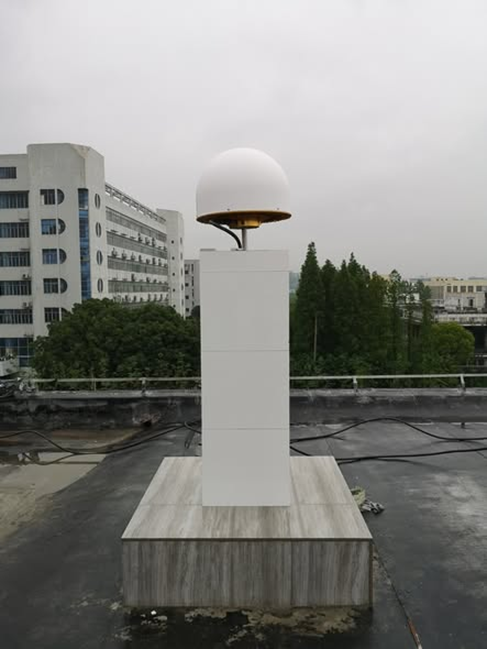
A rooftop base station operates as a fixed reference station. Once reference coordinates are established, the station can continuously provide stable RTK correction data without repeated recalibration, ensuring consistent and traceable positioning results.
2) Flexible power supply options
Rooftop GNSS base stations can be powered by:
- Mains power, suitable for permanent facilities
- Solar panel + battery systems, ideal for farms, construction sites, and remote locations
This flexibility enables 24/7 continuous operation under various deployment conditions.
3) Geodetic-grade antenna performance
Centimeter-level accuracy depends fundamentally on antenna quality.
A geodetic-grade high-precision antenna provides excellent phase center stability and strong multipath suppression, which are essential for reliable long-term RTK performance.
3. Key Technical Conditions for Fast Deployment
A practical rooftop GNSS base station solution should support:
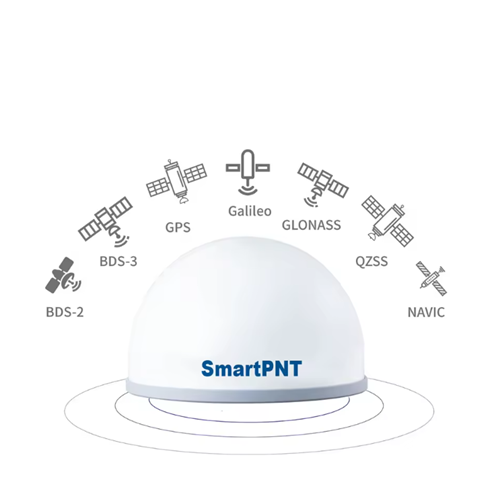
- Full GNSS constellation tracking (GPS, BDS, GLONASS, Galileo, etc.)
- Both 4G network and UHF radio data transmission
- A highly integrated design to minimize installation and on-site complexity
These factors directly impact deployment efficiency and long-term maintenance cost.
4. MA300: A GNSS Smart Base Station for Long-Term Operation
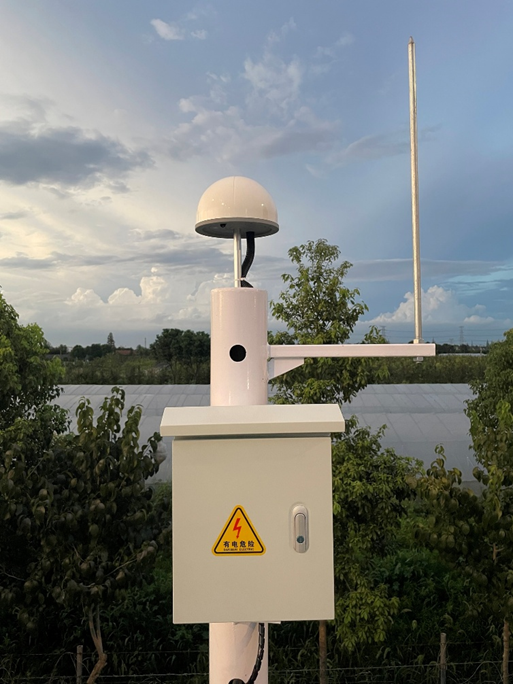
The MA300 GNSS Smart Base Station is designed specifically for rooftop deployment and continuous operation:
- Built-in geodetic-grade high-precision antenna
- Full GNSS constellation tracking with RTK correction output
- Support for both 4G network and UHF radio communication
- Support for mains power or solar + battery power solutions
- One-time setup for long-term, stable operation
Its integrated design reduces deployment effort while maintaining survey-grade accuracy and reliability.
5. Typical Application Scenarios
This rooftop GNSS single base station solution is widely used in:
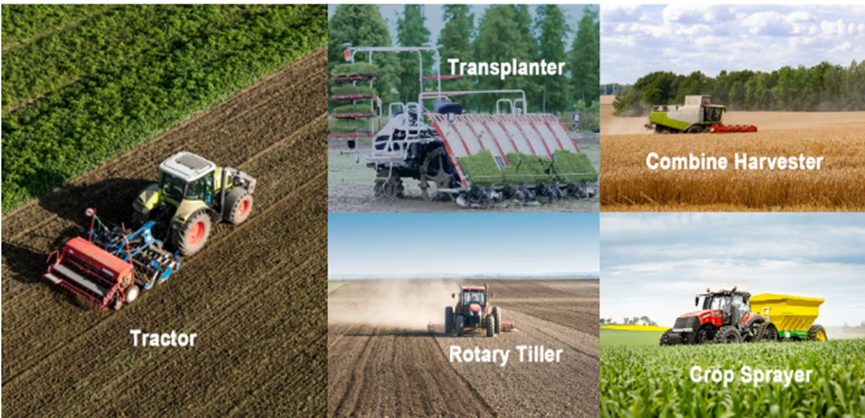
- Precision agriculture: Stable RTK corrections for tractor auto-steering and agricultural machinery
- Surveying & mapping: Local permanent reference stations with consistent results
- Civil engineering and infrastructure projects: Construction layout, roadworks, and earthworks
- Municipal, landscaping, and transportation projects
6. Action Recommendation
If your project requires:
- Long-term, stable centimeter-level GNSS positioning
- RTK services without repeated coordinate calibration
- Flexible power options for grid and off-grid deployment
A rooftop GNSS single base station solution is worth serious consideration.
Contact us to learn more about MA300 or to receive deployment guidance tailored to your specific application.